What Is a Vedic Astrology Reading?
People often turn to astrology when they begin to notice that life follows certain patterns. Opportunities appear at particular moments. Some relationships leave a lasting mark while others pass quietly. At times, the direction of life changes in ways that feel strangely timed.
Vedic astrology attempts to understand these rhythms.
A Vedic astrology reading is the interpretation of a person’s birth chart using the classical principles of Jyotish, the traditional astrological system of India. Instead of relying on general Sun sign descriptions, this system studies the exact planetary positions at the moment a person is born.
From the perspective of Vedic astrology, the moment of birth represents the beginning of an individual’s life cycle. The arrangement of planets in the sky at that moment forms a symbolic map of tendencies, potentials, and timing patterns that may unfold during life.
An astrologer studies this map to understand how planetary influences interact. The aim is not to make simplistic predictions but to identify the deeper structure behind a person’s experiences.
The Birth Chart: The Foundation of Every Reading
Every Vedic astrology reading begins with the construction of a birth chart.
To calculate this chart, three details are required:
- Date of birth
- Exact time of birth
- Place of birth
With this information, an astrologer recreates the position of the planets at that precise moment.
The chart is divided into twelve houses, and each house represents a particular area of life. One house describes personal identity and vitality. Another relates to finances and resources. Others correspond to communication, family life, relationships, career direction, social networks, and spiritual development.
The planets placed in these houses form the foundation of interpretation. Even people born on the same day may have very different lives because their Ascendant and house placements are different. This is why a genuine Vedic astrology reading always focuses on the entire birth chart rather than only the Sun sign.
The Importance of the Ascendant
In most readings, the first point examined is the Ascendant, also known as the rising sign.
The Ascendant is the zodiac sign that was rising on the eastern horizon at the moment of birth. Because the Earth rotates continuously, this sign changes roughly every two hours. For this reason, an accurate birth time is essential for serious chart interpretation.
The Ascendant determines the structure of the twelve houses in the chart. Once it is established, the astrologer can begin examining how the planets influence different areas of life.
In practical terms, the Ascendant represents the physical self, the approach to life, and the overall direction through which a person engages with the world. Many experienced astrologers consider it one of the most important factors in the birth chart.
The Role of the Planets
A Vedic astrology reading revolves around understanding the placement and influence of the planets.
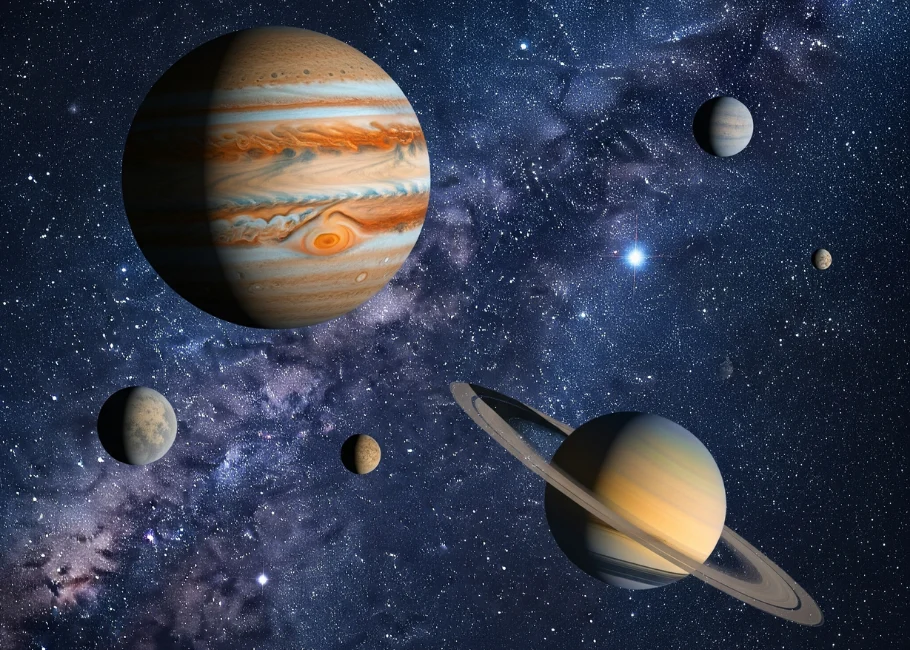
In Jyotish, each planet represents a specific principle within human life.
- The Sun represents identity, vitality, and authority.
- The Moon reflects emotional nature and the functioning of the mind.
- Mars represents action, courage, and determination.
- Mercury governs communication, intellect, and analytical thinking.
- Jupiter represents wisdom, expansion, and guidance.
- Venus relates to relationships, harmony, and aesthetic appreciation.
- Saturn symbolizes responsibility, discipline, and the lessons of time.
In addition to these planets, Vedic astrology studies Rahu and Ketu. These two points are closely connected with karmic direction and the evolutionary themes that shape a person’s life path.
When an astrologer studies a birth chart, the position of each planet, the house it occupies, and the aspects it forms with other planets all contribute to the interpretation.
The Role of Nakshatras
One of the defining features of Vedic astrology is the use of Nakshatras, also known as lunar constellations.
The zodiac is divided into twenty-seven Nakshatras, each carrying symbolic qualities that add depth to chart interpretation.
While zodiac signs describe broad personality tendencies, Nakshatras often reveal deeper psychological motivations and instinctive responses to life experiences.
The Moon’s Nakshatra is particularly important in many readings because it reflects how the mind processes emotions and responds to the world.
Understanding Timing Through Planetary Periods
Life does not unfold uniformly. Certain phases bring opportunity and expansion, while others require patience and restructuring.
In Vedic astrology, these phases are studied through planetary periods, known as dashas.
Each planet governs a specific period of time during which its influence becomes more prominent in a person’s life. When these planetary periods are analyzed alongside planetary transits, astrologers can identify phases when particular themes may become more significant.
This system of timing is one of the reasons why Vedic astrology is known for its detailed predictive techniques.
What a Vedic Astrology Reading Can Reveal
A thoughtful Vedic astrology reading may offer insight into several areas of life.
It can highlight natural talents and abilities, emotional tendencies, relationship patterns, career inclinations, financial habits, and periods when important life transitions may occur.
Rather than presenting rigid predictions, astrology reveals tendencies and cycles that help individuals understand their own experiences with greater clarity.
The Philosophical Perspective Behind Vedic Astrology
Traditional Jyotish is closely connected to the concept of karma. According to this philosophy, the birth chart reflects tendencies carried into this lifetime through past experiences and actions.
These tendencies do not remove personal freedom. Instead, they describe the conditions through which growth and learning occur.
A Vedic astrology reading, therefore, serves as a tool for awareness. By understanding the patterns in the birth chart, individuals can approach their decisions with a clearer understanding of the forces influencing their lives.
Final Thoughts
A genuine Vedic astrology reading is a careful interpretation of the birth chart guided by principles that have developed over centuries of observation and study.
When approached thoughtfully, the birth chart becomes more than a diagram of planetary positions. It becomes a symbolic reflection of the individual’s life journey.
For many people, astrology offers a deeper way to reflect on life’s experiences and to understand the rhythms through which personal growth unfolds.